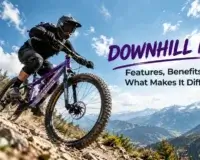

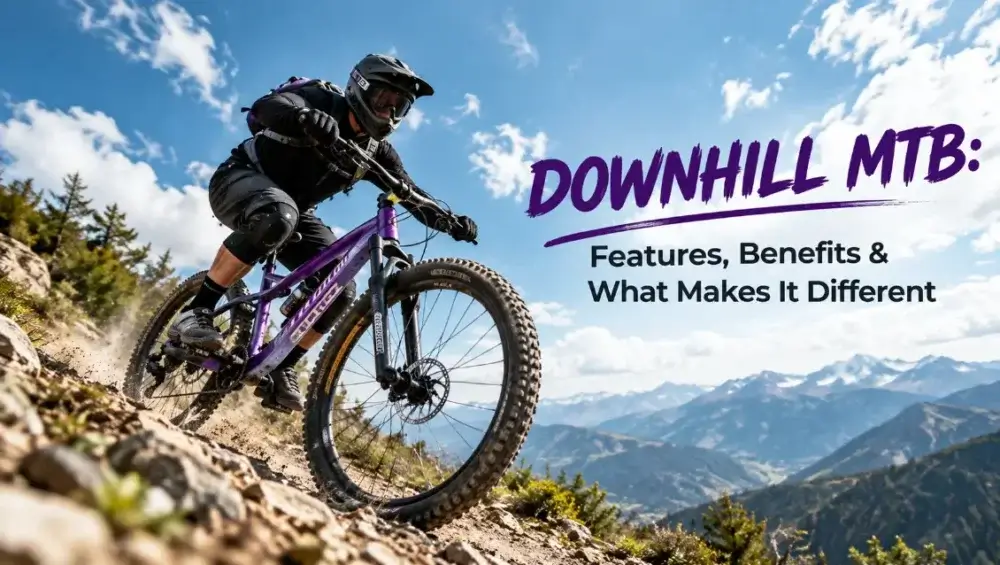
A Downhill MTB is designed for riders who enjoy steep descents, technical trails, rough terrain and gravity-focused mountain biking. Unlike a standard mountain bike designed for a mixture of climbing, trail riding and recreational cycling, a downhill mountain bike is built with greater emphasis on stability, control, suspension and braking performance.
When riding down rocky or uneven trails at speed, the bike needs to remain predictable and stable. Features such as suspension, wide tyres, strong frames and powerful brakes can help riders maintain control across demanding terrain.
But what exactly makes a Downhill MTB different from other mountain bikes?
In this guide, we’ll look at the main features of downhill bikes, where they perform best, their benefits, how they compare with other MTB types and what to consider before choosing one.
What Is a Downhill MTB?
A Downhill MTB is a mountain bike specifically designed for descending steep, rough and technical terrain.
Downhill riding places different demands on a bicycle compared with general trail riding. Instead of focusing equally on climbing and descending, downhill bikes are designed primarily around controlled descents.
They are commonly associated with:
- Steep downhill trails
- Bike parks
- Rocky terrain
- Technical descents
- Jumps and drops
- Rough woodland tracks
- Gravity-focused riding
A downhill MTB typically prioritises stability and control over climbing efficiency.
This makes it particularly suitable for riders whose main interest is descending challenging terrain rather than covering a mixture of uphill and downhill routes.
What Makes a Downhill MTB Different?
Several features distinguish a downhill mountain bike from a conventional MTB.
The most important include:
- Suspension
- Frame geometry
- Strong frame construction
- Powerful braking
- Wide, high-grip tyres
- Stable handling
- Components designed for demanding terrain
The exact specifications vary by bike, so it is important to check the manufacturer’s specifications before buying.
Long-Travel Suspension
Suspension is one of the most important features associated with downhill riding.
Rough descents can contain:
- Rocks
- Roots
- Ruts
- Drops
- Jumps
- Uneven surfaces
Suspension helps absorb impacts and allows the wheels to maintain better contact with the ground.
A dedicated downhill bike typically features substantial suspension travel because descending rough terrain generates significantly more impact than riding on smooth roads.
Front Suspension
The front suspension helps the front wheel clear obstacles while reducing the impact of bumps reaching the handlebars.
This can improve comfort and control when riding rough trails.
Rear Suspension
Full-suspension downhill bikes also have rear suspension.
The rear suspension helps the rear wheel respond to rough terrain, improving traction and reducing harsh impacts.
For demanding downhill riding, full suspension can provide significant advantages over a rigid or front-suspension-only setup.
Stable Downhill Geometry
The geometry of a mountain bike affects how it handles.
A downhill-focused design generally aims to provide confidence and stability when travelling quickly down steep terrain.
Important geometry considerations include:
- Head angle
- Wheelbase
- Reach
- Bottom bracket position
- Frame size
A stable geometry can make the bike feel more controlled when travelling over technical sections.
However, geometry is only one part of the overall bike design. Suspension setup, frame size, tyres and rider position also affect handling.
Powerful Brakes Matter
Braking is particularly important for downhill riding.
Descending steep trails can require frequent speed adjustments, especially when approaching:
- Tight corners
- Obstacles
- Steep sections
- Other trail users
- Jumps or technical features
A downhill mountain bike therefore benefits from a strong and reliable braking system.
Disc brakes are commonly used on mountain bikes because they provide effective braking performance across demanding conditions.
When choosing a bike, don’t simply look at the number or size of the brake components. Consider the complete braking system and whether it is appropriate for your intended riding.
Wide Tyres for Better Grip
Tyres are another important part of a Downhill MTB.
Downhill trails can include loose dirt, rocks, mud and uneven surfaces. Suitable tyres can provide the traction required to maintain control.
A downhill-oriented tyre generally prioritises:
- Grip
- Stability
- Durability
- Puncture resistance
- Control on uneven terrain
The ideal tyre depends on the surface you ride most frequently.
For example, a tyre suited to dry, rocky terrain may perform differently from one designed for muddy trails.
Strong and Durable Frame
Downhill riding can place significant loads on the bicycle.
The frame therefore needs to be appropriate for the intended type of riding.
A well-designed mountain bike frame should provide a balance between:
- Strength
- Durability
- Weight
- Handling
- Rider fit
Aluminium alloy is commonly used in mountain bikes because it can provide a useful balance of strength and weight.
For example, the Tiger Ace V3 27.5 Mountain Bike currently listed by CT Bikes uses a 6061 alloy hardtail frame with internally routed cables and is available in 15-inch, 17-inch and 19-inch frame sizes.
It’s important to note that not every bike marketed or categorised as a downhill MTB is a purpose-built World Cup-style downhill bike. Always check the individual product specifications and intended use.
Hardtail vs Full Suspension for Downhill Riding
One of the biggest differences between mountain bikes is whether they use a hardtail or full-suspension design.
Hardtail Mountain Bikes
A hardtail has front suspension but no rear suspension.
Advantages can include:
- Simpler design
- Lower maintenance
- Often lower cost
- Efficient on smoother trails
- Generally easier to maintain
A hardtail can be a good option for general off-road riding and less demanding terrain.
However, on extremely rough downhill terrain, the lack of rear suspension can make the ride harsher and reduce the bike’s ability to absorb impacts.
Full Suspension Mountain Bikes
A full-suspension bike has suspension at both the front and rear.
Potential benefits include:
- Improved comfort
- Better traction
- Greater control over rough terrain
- Better impact absorption
- More confidence on technical descents
For riders focusing heavily on demanding downhill terrain, full suspension can be advantageous.
CT Bikes currently has a separate Full Suspension category that includes models such as the Bergamont Trailster EX7.0.
Downhill MTB vs Regular Mountain Bike
A regular mountain bike can be suitable for general off-road cycling, woodland paths, recreational trails and mixed terrain.
A Downhill MTB has a more specialised purpose.
| Feature | Regular MTB | Downhill MTB |
|---|---|---|
| Main purpose | General off-road riding | Steep descents |
| Climbing | More practical | Usually not the main focus |
| Suspension | Varies | Usually designed for demanding descents |
| Geometry | General-purpose | Stability-focused |
| Tyres | Trail/off-road | High-grip downhill use |
| Brakes | Varies | Strong braking is important |
| Technical descents | Depends on model | Primary use |
| Bike park riding | Some models | Particularly suitable |
The right option depends on how you ride.
If you want one bicycle for climbing, descending and general trail riding, a trail or enduro bike may be more versatile.
If descending is your main priority, a downhill-focused MTB may make more sense.
Downhill MTB vs Enduro Bike
Downhill and enduro bikes can look similar because both are designed for challenging mountain terrain, but their purposes are different.
An enduro bike is designed to handle both climbs and technical descents. A downhill bike is much more focused on descending.
Choose an enduro bike if you want to:
- Climb trails
- Ride long mountain routes
- Descend technical sections
- Use one bike for varied terrain
A downhill MTB may be better suited if your main riding involves:
- Bike parks
- Shuttle-accessed trails
- Steep descents
- Large technical features
- Gravity-focused riding
CT Bikes already has a dedicated article comparing Downhill MTB and Enduro bikes, so this distinction can also serve as an internal linking opportunity rather than repeating the full comparison here.
What Are Downhill MTBs Used For?
A Downhill MTB is particularly suited to gravity-focused riding.
Bike Parks
Many bike parks feature purpose-built downhill trails with berms, jumps, drops and technical sections.
Steep Descents
The stable design of downhill-oriented bikes makes them suitable for riders who spend most of their time descending.
Technical Trails
Rock gardens, roots and uneven terrain can be challenging on a standard bicycle. A suitable MTB can provide greater control and suspension support.
Gravity Riding
Downhill cycling is fundamentally a gravity-focused discipline. Riders use elevation to build speed while controlling the bike through technical terrain.
Benefits of Riding a Downhill MTB
A well-chosen downhill mountain bike can offer several advantages for riders who focus on descending.
Better Stability
A downhill-oriented design can provide greater stability when travelling over rough terrain.
Improved Control
Suspension, tyres, brakes and geometry work together to help the rider control the bike.
More Confidence
A bike that is appropriate for the terrain can make challenging sections feel more manageable.
Better Impact Management
Suspension helps reduce the effect of bumps and impacts on rough trails.
Purpose-Built Performance
Instead of adapting a general-purpose bike to demanding downhill riding, a downhill MTB is designed around the needs of descending.
Is a Downhill MTB Suitable for Beginners?
A beginner can ride a downhill MTB, but that doesn’t necessarily mean it is the best first mountain bike for everyone.
If you’re completely new to mountain biking, you may benefit from starting with easier trails and developing fundamental skills such as:
- Braking
- Cornering
- Body positioning
- Balance
- Line selection
- Speed control
A general-purpose hardtail or trail MTB may be more practical if you want to explore different types of riding.
However, if your primary goal is to learn to ride downhill and you have access to suitable trails or a bike park, a downhill-oriented bike may be appropriate.
The important thing is to match the bike to your skill level, terrain and riding goals.
How to Choose a Downhill MTB
Before buying a downhill mountain bike, consider several factors.
Consider Your Riding Style
First, ask where you intend to ride.
Do you mainly ride:
- Local trails?
- Forest tracks?
- Bike parks?
- Steep mountain descents?
- Technical downhill courses?
Your answer should influence the type of MTB you choose.
Choose the Correct Frame Size
A properly sized bike is essential for control and comfort.
A frame that is too large or too small can affect:
- Reach
- Body position
- Steering
- Cornering
- Overall control
Always check the manufacturer’s frame-size recommendations.
Check the Suspension
Consider the type and amount of suspension offered.
For rough downhill terrain, suspension performance becomes particularly important.
Check the Brakes
Look at the complete braking system and make sure it is suitable for your intended riding.
Consider the Wheels and Tyres
Wheel size, tyre width and tread pattern can all affect handling and grip.
Set a Realistic Budget
Downhill bikes can vary dramatically in price.
You don’t necessarily need the most expensive bike to start riding, but your bike should have specifications suited to your intended terrain.
Downhill MTB for Sale: What Should You Check?
If you’re searching for a Downhill MTB for sale, avoid making your decision based only on the price or appearance.
Check:
- Frame material and size
- Suspension setup
- Brake system
- Wheel size
- Tyres
- Gearing
- Intended riding type
- Manufacturer specifications
- Available frame sizes
- Overall condition if buying used
CT Bikes’ current Downhill MTB category includes 13 results in the latest crawl, including Python Rock and Tiger models, the Bergamont Roxtar 10.0, and other mountain bikes.
The specifications vary considerably, so compare individual product pages rather than assuming every bike in the category has the same downhill capabilities.
How to Maintain a Downhill MTB
Regular maintenance is particularly important when riding on rough terrain.
Clean the Bike Regularly
Mud, dust and debris can build up around the drivetrain, suspension and brakes.
Check the Brakes
Inspect the brake system regularly and address unusual noises, reduced braking power or other problems promptly.
Inspect the Tyres
Look for:
- Cuts
- Excessive wear
- Low pressure
- Embedded debris
- Sidewall damage
Check the Suspension
Follow the manufacturer’s recommended inspection and servicing schedule.
Clean and Lubricate the Chain
A clean drivetrain helps the gears operate smoothly.
Inspect the Frame
After demanding rides, inspect the frame and components for visible damage or unusual movement.
If you identify a serious mechanical issue, have the bike inspected by a qualified bicycle mechanic.
Safety Tips for Downhill MTB Riding
Downhill riding can involve higher speeds and challenging terrain, so appropriate safety preparation is essential.
Wear suitable protective equipment, including:
- Properly fitted helmet
- Gloves
- Appropriate cycling clothing
- Knee protection where appropriate
- Elbow protection where appropriate
- Suitable footwear
Before attempting difficult trails, develop your braking, cornering and body-positioning skills on terrain that matches your experience.
Never assume that having a capable bike makes a difficult trail automatically safe.
Why Choose CT Bikes for a Downhill MTB?
CT Bikes has a dedicated Downhill MTB category within its mountain bike collection, giving riders access to a range of models and specifications.
The current category includes models such as:
- Python Rock mountain bikes
- Tiger Momentum
- Tiger Hazard
- Tiger Ace V3
- Tiger Vulture
- Bergamont Roxtar 10.0
- Falcon Enamelware XC18
The available specifications vary from model to model, including different wheel sizes, frame sizes, gearing systems and suspension configurations.
Before choosing, compare the individual specifications and select a bike that matches your riding style and experience.
Key Takeaways
- A Downhill MTB is designed primarily for steep and technical descents.
- Suspension plays an important role in handling rough terrain.
- Strong brakes are essential for controlled downhill riding.
- Suitable tyres provide grip and stability.
- Frame geometry affects handling and confidence.
- Hardtail and full-suspension bikes have different strengths.
- Downhill bikes are more specialised than general-purpose mountain bikes.
- Enduro bikes are generally more versatile for climbing and descending.
- Beginners should choose a bike according to their experience and intended terrain.
- Always check frame size and individual product specifications before buying.
- Proper maintenance and safety equipment are essential for downhill riding.
Conclusion
A Downhill MTB is built around one main goal: giving riders the control and stability needed for demanding descents.
Its suspension, braking system, tyres, frame design and geometry all contribute to how the bike performs on steep and technical terrain. However, the most suitable bike depends on where you ride and what you want from your mountain bike.
If you mainly enjoy general trails and mixed terrain, a trail or enduro MTB may provide greater versatility. If your focus is steep descents, bike parks and gravity-focused riding, a downhill-oriented mountain bike can be a better match.
Before buying, consider your riding style, experience, frame size, suspension, brakes, tyres and budget. Most importantly, choose a bike that matches the terrain you actually intend to ride.
For riders looking to explore their options, CT Bikes’ Downhill MTB collection offers a range of models to compare by specification.
FAQs About Downhill MTB
What is a Downhill MTB?
A Downhill MTB is a mountain bike designed primarily for steep, rough, and technical descents. It focuses on stability, control, suspension, braking performance, and grip to help riders handle challenging downhill terrain.
Is a Downhill MTB good for beginners?
A Downhill MTB can be ridden by beginners, but it may not be the most versatile first mountain bike. New riders should consider their experience, riding goals, and intended terrain before choosing a downhill-focused bike.
What is the difference between a Downhill MTB and a regular mountain bike?
A Downhill MTB is specifically designed for steep descents and technical terrain, while a regular mountain bike is generally built for a wider range of off-road riding. Downhill bikes typically prioritise stability, suspension, braking, and control over climbing efficiency.
Is full suspension better for downhill riding?
Full suspension can provide improved comfort, traction, and impact absorption on rough downhill trails. However, the best suspension setup depends on the terrain, riding style, experience, and specific type of mountain biking you plan to do.
Are Downhill MTBs good for bike parks?
Yes, Downhill MTBs are particularly suitable for bike parks that feature steep descents, technical sections, jumps, drops, and other gravity-focused terrain. Always make sure the bike is appropriate for the specific trails you intend to ride.
Where can I buy a Downhill MTB in the UK?
You can explore the Downhill MTB collection at CT Bikes, which offers a range of mountain bikes with different specifications, frame sizes, wheel sizes, and features. Compare the individual models to find a downhill mountain bike that suits your riding style, experience, and intended terrain.