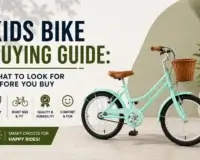

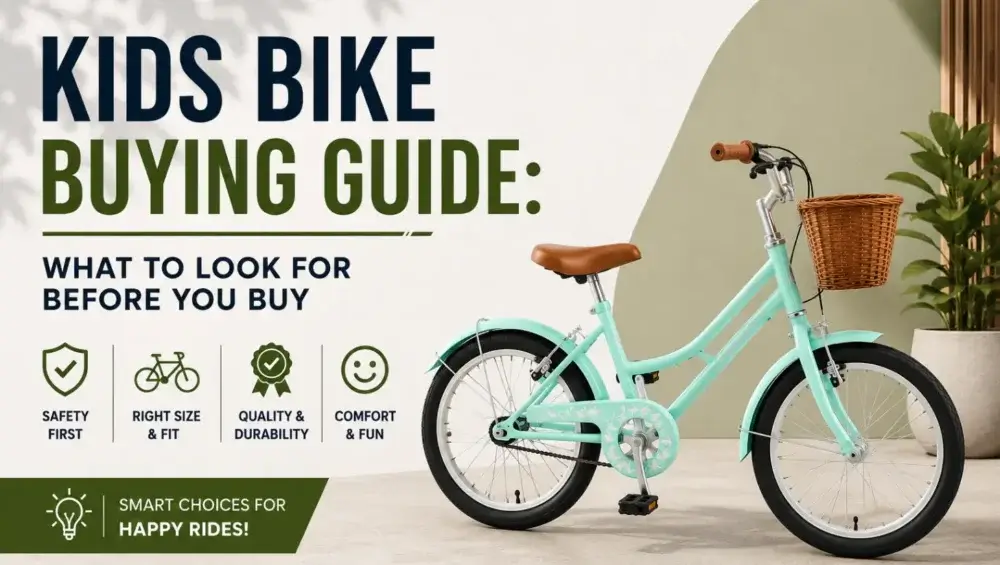
Buying a kids bike is an exciting step, but choosing the right one can be surprisingly difficult. With different wheel sizes, styles, gears, brakes and features available, it is easy to focus on appearance or price and overlook what matters most for your child.
The best children’s bike should suit your child’s size, riding ability, confidence and intended use. It should be comfortable to control, easy to handle and appropriate for their current stage of development.
While age can provide a general starting point, height and inseam are more useful when choosing the right bike size. CT Bikes’ existing children’s bike size guide also recommends considering height, inseam and riding confidence rather than relying on age alone.
In this kids bike buying guide, we’ll explain the key things to consider before buying, from wheel size and bike weight to brakes, gears, frame design and safety features.
What Should You Look for in a Kids Bike?
Before choosing a particular model, consider these important factors:
- Correct wheel size
- Child’s height and inseam
- Riding experience and confidence
- Bike weight
- Brake type
- Number of gears
- Frame design
- Saddle and handlebar adjustment
- Tyre type
- Intended riding environment
- Safety features
- Overall build quality
- Budget
A good kids bike should allow your child to sit comfortably, reach the controls easily and maintain good control while riding.
The most expensive bike is not necessarily the best choice. Instead, look for a model that provides the right fit and features for your child.
Choose the Right Kids Bike Size
One of the most important decisions is choosing the correct wheel size. Children’s bikes are generally identified by their wheel diameter, with common sizes including 12-inch, 14-inch, 16-inch, 18-inch, 20-inch and 24-inch wheels.
As a general guide:
Wheel SizeTypical Age*Approx. Height*Best For
12-inch 2–4 years 85–100 cm First pedal bikes
14-inch 3–5 years 95–110 cm Young beginners
16-inch 4–6 years 105–120 cm Developing riders
18-inch Varies Check manufacturer Growing children
20-inch 6–9 years 115–135 cm More confident riders
24-inch 9–12 years 130–150 cm Older children
*Age and height ranges are general guidelines. Always check the individual bike’s specifications and your child’s measurements.
CT Bikes currently offers children’s bikes across several wheel sizes, including 12-, 14-, 16-, 20- and 24-inch models.
12-Inch Kids Bikes
A 12-inch kids bike is generally designed for young riders who are beginning to develop their cycling skills.
Look for features such as:
- Simple controls
- Easy-to-reach brakes
- Stable handling
- Adjustable saddle
- Optional stabilisers where appropriate
A smaller, manageable bike can help a young rider feel more confident when learning.
14-Inch Kids Bikes
A 14-inch children’s bike can be a good next step for a young rider who has developed basic balance and pedalling skills.
Some models are designed specifically for younger children. For example, CT Bikes currently lists 14-inch models aimed at children ages 3–5.
16-Inch Kids Bikes
A 16-inch kids bike is commonly suited to children who are becoming more confident on two wheels.
Look for:
- Comfortable riding position
- Easy braking
- Adjustable components
- Stable tyres
- A manageable overall weight
20-Inch Kids Bikes
A 20-inch bike is suitable for many older or more experienced children. These bikes can offer more riding capability and may include gears.
They can be suitable for:
- Park rides
- Family cycling
- Longer recreational rides
- School journeys where appropriate
- Light trails, depending on the model
CT Bikes’ current children’s collection includes 20-inch junior models with both single-speed and geared options.
24-Inch Kids Bikes
A 24-inch kids bike is often the step before moving towards an adult-sized bicycle.
Older children may benefit from:
- Larger wheels
- More advanced gearing
- Stronger braking systems
- A larger riding position
- Increased riding range
The important point is not to select a 24-inch bike simply because your child is getting older. Their height, inseam and ability should determine whether the size is appropriate.
Consider Your Child’s Height and Inseam
One of the biggest mistakes parents make is buying a bike based only on age.
Children grow at different rates, so two children of the same age may require completely different bikes.
Before buying, measure:
Your Child’s Height
Have your child stand straight without shoes and measure from the floor to the top of their head.
Their Inseam
Measure from the floor to the crotch while your child is standing comfortably.
Inseam is useful because it helps you determine whether your child can comfortably sit on the bike and reach the ground.
Their Riding Ability
Also ask:
- Have they ridden a bike before?
- Can they balance independently?
- Can they brake confidently?
- Are they comfortable starting and stopping?
- Do they mainly ride on pavements, in parks, or on trails?
These factors can be just as important as measurements.
Choose a Kids Bike Based on Riding Ability
Not every child needs the same type of bike.
A beginner may benefit from a simple, lightweight single-speed model, while a confident older rider may want gears or a more capable frame.
For First-Time Riders
Prioritise:
- Easy handling
- Simple controls
- Low weight
- Stable tyres
- Comfortable saddle
- Easy-to-use brakes
Avoid unnecessary features that could make the bike more complicated.
For Confident Young Riders
If your child already rides independently, you can consider additional features such as:
- Multiple gears
- Larger wheels
- More advanced brakes
- Wider tyres
- Mountain-bike-style designs
The bike should still match the riding your child actually does.
What Type of Kids Bike Should You Buy?
Children’s bicycles are available in several styles.
Balance Bikes
Balance bikes have no pedals and allow children to develop balance and steering before progressing to a pedal bike.
They can be useful for children who are not yet ready for a traditional pedal bike.
Single-Speed Kids Bikes
Single-speed bikes are simple and easy to use.
They are particularly useful for:
- Beginners
- Flat routes
- Short rides
- Children who are still learning
With no gear shifting to worry about, your child can concentrate on steering, braking and pedalling.
Geared Kids Bikes
A kids bike with gears can be useful when your child is ready for longer or more varied rides.
Gears can make hills and changes in terrain easier, but they also introduce an additional level of control that a beginner may not need.
If your child is already confident and regularly rides on different terrain, a geared bike may be worth considering.
Kids Mountain Bikes
A children’s mountain bike can be appropriate for older riders who want to ride on more challenging terrain beyond smooth roads and paths.
However, don’t buy a mountain bike simply because it looks more adventurous. Choose one based on where your child will actually ride.
Should You Buy a Kids Bike with Gears?
The answer depends on your child’s age, confidence and riding environment.
A geared kids bike can be useful if your child:
- Rides on hills
- Goes on longer family rides
- Regularly encounters different terrain
- Understands basic bike controls
- Is confident with braking and steering
A single-speed bike may be better if your child:
- Is learning to ride
- Mostly rides on flat surfaces
- Takes short trips
- Finds multiple controls confusing
For a first bike, simplicity is often more useful than having lots of features.
Are Lightweight Kids Bikes Better?
Bike weight is an important consideration that is sometimes overlooked.
A heavy bike can be harder for a child to:
- Start
- Stop
- Steer
- Carry
- Manoeuvre
- Control when making turns
A lightweight kids bike can make riding feel easier and more manageable.
However, weight should not be considered alone. The bike still needs appropriate construction, reliable brakes and suitable components.
The best choice is a bike that balances manageable weight, durability, comfort and safety.
Check the Brakes Before Buying
Reliable brakes are one of the most important features on any children’s bicycle.
Your child should be able to operate the brakes comfortably without struggling to reach the levers.
Depending on the bike, you may find:
- Hand brakes
- Coaster brakes
- Front and rear braking systems
For younger children, make sure the controls are easy to understand and operate.
As children gain experience, learning to use hand brakes properly is an important part of developing their cycling skills.
Look for Adjustable Components
Children grow quickly, so adjustability can make a bike more practical.
Look for:
- Adjustable saddle height
- Adjustable handlebars
- Suitable seat positioning
- Sufficient adjustment range
An adjustable bike can remain comfortable as your child grows.
However, don’t buy a bike that is significantly too large simply because it has adjustable components. Correct fit should come first.
Check the Tyres
Tyres directly affect grip, comfort and handling.
Think about where your child will ride.
For Pavements and Roads
A smoother or moderately treaded tyre can work well for everyday riding.
For Parks and Light Trails
A tyre with more tread can provide additional grip on loose or uneven surfaces.
For Mixed Riding
A versatile tread pattern can be useful if your child rides on both paved paths and park surfaces.
Choose tyres according to the riding environment rather than simply selecting the widest option available.
Consider the Frame Design
A child’s bike should be easy to mount and dismount.
A suitable frame should provide:
- Comfortable stand-over space
- Easy access
- Stable handling
- Appropriate reach to the handlebars
The frame should also suit the child’s proportions.
A bike that technically has the correct wheel size can still feel uncomfortable if the frame geometry or riding position isn’t suitable.
Don’t Choose a Kids Bike Based Only on Appearance
Children naturally have preferences about colours and designs, and it’s good to involve them in the decision.
CT Bikes’ current children’s collection includes a variety of styles and designs, including junior bikes from brands such as Viking, Falcon, Tiger, RoyalBaby, Huffy and Dawes.
However, appearance should come after fit, safety and suitability.
A good approach is:
- Find the correct size.
- Narrow down suitable bike types.
- Check brakes and weight.
- Consider features.
- Let your child choose their preferred design.
This gives your child some ownership of the decision without compromising on practical requirements.
Stabilisers vs Balance Bikes
Parents often wonder whether stabilisers or a balance bike is better for a beginner.
A balance bike allows children to develop balancing and steering skills by pushing along with their feet.
Stabilisers provide additional support while a child learns to pedal.
Both approaches can be useful depending on the child. The important thing is to choose a method that matches their confidence and development.
If your child already has good balance skills, transitioning to a pedal bike may be easier.
How Much Should You Spend on a Kids Bike?
There isn’t one correct budget for every family.
Instead of choosing the cheapest bike available, consider the overall value.
Look at:
- Frame quality
- Components
- Brakes
- Tyres
- Adjustability
- Weight
- Expected usage
- Durability
A bike used occasionally around the garden may have different requirements from one used regularly for family cycling.
It’s also worth considering how quickly your child is likely to outgrow the bike.
Common Mistakes to Avoid When Buying a Kids Bike
Buying Too Large
Don’t buy a bike that is too large just because your child will eventually grow into it.
An oversized bike can be difficult to control and may reduce confidence.
Choosing Only by Age
Age recommendations are useful, but they should not be the only measurement.
Consider height, inseam and riding ability.
Ignoring Bike Weight
A heavy bike can make cycling unnecessarily difficult for a young rider.
Adding Too Many Features
More gears and advanced components aren’t automatically better.
Choose features your child can actually use.
Forgetting Safety Equipment
A bike is only part of a child’s cycling setup.
Consider a properly fitted helmet, lights where appropriate, reflectors and a bell.
Focusing Only on Price
The cheapest option may not provide the best combination of comfort, durability and usability.
Think about value rather than price alone.
Kids Bike Safety Checklist
Before your child rides, check the bicycle and safety equipment.
Before Every Ride
- Check that the tyres are properly inflated.
- Test the brakes.
- Make sure the saddle is secure.
- Check the handlebars.
- Inspect the chain and drivetrain.
- Make sure the wheels are secure.
- Ensure the helmet fits correctly.
Teach Your Child Good Riding Habits
Encourage your child to:
- Look ahead while riding.
- Brake smoothly.
- Stay aware of pedestrians and traffic.
- Follow applicable cycling rules.
- Avoid distractions.
- Wear suitable footwear.
- Use lights or reflective equipment when necessary.
Teaching children good habits early can help them become more confident and responsible cyclists.
How to Maintain a Children’s Bike
Regular maintenance keeps a children’s bike working properly.
Clean the Bike
Remove dirt and mud from the frame, wheels and drivetrain.
Check the Tyres
Inspect tyres regularly for low pressure, excessive wear or damage.
Test the Brakes
Make sure the brakes engage properly and that your child can operate them comfortably.
Lubricate the Chain
A clean and appropriately lubricated chain helps the drivetrain operate smoothly.
Check Bolts and Adjustments
Periodically check important components such as the saddle, handlebars and wheels.
If you’re unsure about a mechanical problem, have the bike inspected by a qualified bicycle mechanic.
Why Buy Kids Bikes from CT Bikes?
Choosing the right retailer can make finding a children’s bike easier.
CT Bikes offers a dedicated Children’s Bike collection with a range of wheel sizes, styles and specifications for different young riders. The current collection includes models ranging from smaller 12-inch bikes through to larger 24-inch children’s bikes.
The collection includes options such as single-speed junior bikes, geared models and bikes designed for different riding styles.
Whether you’re looking for a child’s first pedal bike or a larger model for a growing rider, compare the available sizes and specifications carefully to find the option that best matches your child’s needs.
Explore the Children’s Bike collection at CT Bikes to find a bike for your young rider.
Quick Kids Bike Buying Checklist
Before placing your order, ask yourself:
- Is this the correct wheel size?
- Does it suit my child’s height and inseam?
- Can my child reach the brakes comfortably?
- Is the bike manageable in weight?
- Does my child need gears?
- Where will the bike mainly be used?
- Is the saddle adjustable?
- Are the tyres suitable for the intended surface?
- Does the bike provide an appropriate riding position?
- Do we have the necessary safety equipment?
If you can answer these questions confidently, you’re much more likely to choose a bike your child will enjoy riding.
Key Takeaways
- Choose a kids’ bike based on height, inseam and riding ability rather than age alone.
- Select the correct wheel size for better control and comfort.
- A lightweight design can make handling easier for young riders.
- Beginners often benefit from simple single-speed bikes.
- Geared bikes can be useful for confident riders and varied terrain.
- Always check brake reach and operation before buying.
- Adjustable saddles and handlebars can improve comfort as children grow.
- Choose tyres according to where your child will ride.
- Don’t buy a bike that is too large to allow for future growth.
- Prioritise fit, safety and usability over appearance or price.
Conclusion
Choosing the right kids’ bike doesn’t have to be complicated. The key is to focus on your child’s individual needs rather than choosing a bike simply because it looks good or matches their age.
Start with the correct wheel size, then consider height, inseam, riding ability and intended use. From there, look at important features such as weight, brakes, gears, tyres and adjustability.
A well-fitted children’s bike can make riding more comfortable, manageable and enjoyable while helping your child build confidence on two wheels.
If you’re ready to find the right bike, explore the Children’s Bike collection at CT Bikes and compare the available sizes and styles for your young rider.
FAQs About Kids Bikes
What size kids bike should I buy?
The right kids bike size depends mainly on your child’s height, inseam, age, and riding ability. Children’s bikes commonly use 12 to 24-inch wheels, but sizing can vary between brands and models. Always check the manufacturer’s sizing recommendations to find a bike that your child can control comfortably.
Is a lightweight kids bike better?
Yes, a lightweight kids bike can make it easier for a child to steer, balance, start, stop, and manoeuvre. However, weight should not be the only consideration. Look at the bike’s fit, frame quality, brakes, durability, and overall design before making a decision.
Should I buy a kids bike with gears?
A kids bike with gears can be useful for confident riders who cycle on hills, longer routes, or varied terrain. For younger or beginner riders who mainly use flat paths, a single-speed bike may be easier to learn on and simpler to operate.
Are stabilisers better than a balance bike?
Both stabilisers and balance bikes can help children develop cycling skills. A balance bike focuses on balance, steering, and coordination, while stabilisers provide additional support while learning to pedal. The better option depends on your child’s age, confidence, and stage of development.
What should I check before buying a children’s bike?
Before buying a children’s bike, check the wheel size, frame fit, weight, brakes, saddle height, handlebar position, tyres, and intended use. Your child should be able to sit comfortably, control the bike confidently, and reach the brakes and other controls safely.
Where can I buy kids bikes in the UK?
You can explore the Children’s Bike collection at CT Bikes, which offers children’s bikes in different sizes and styles. Compare the available models, specifications, frame sizes, and features to find a kids bike that suits your child’s age, height, riding ability, and intended use.