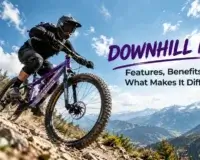

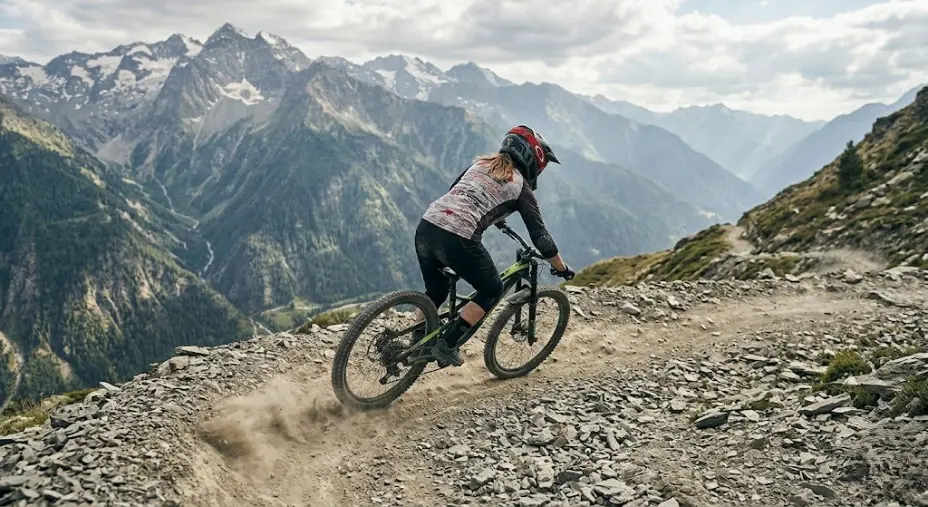
Choosing the right downhill MTB is important if you want more control, confidence, and comfort on steep trails. Downhill riding is very different from normal cycling because the bike has to handle speed, rough ground, sharp corners, rocks, drops, and sudden braking. That is why a proper downhill mountain bike needs strong parts, reliable brakes, good suspension, and a stable frame.
Whether you are a beginner looking for your first MTB for downhill riding or you are upgrading from a regular mountain bike, this guide will help you understand what to look for before buying. From frame type and suspension to wheel size, gears, brakes, and budget, here is everything you need to know before choosing the right downhill bike for steep trails.
What Is a Downhill MTB?
A downhill MTB is a mountain bike designed for riding down steep, rough, and technical trails. These bikes are built to give better control at speed and more comfort on uneven ground. Compared with a regular bike, downhill bikes usually have stronger frames, wider tyres, powerful brakes, and better suspension.
Downhill mountain biking is all about control. When you are riding over rocks, roots, mud, and fast descents, your bike must stay stable. A good downhill mountain bike helps absorb bumps, keeps the wheels connected to the trail, and gives the rider more confidence when the terrain gets difficult.
Downhill MTB vs Normal Mountain Bike
A normal mountain bike can handle light off-road riding, forest paths, and basic trails. However, if you plan to ride steep descents or rough tracks often, a proper bike for downhill riding is a better choice.
The main differences are:
- Stronger frame: A downhill bike frame is usually built to handle more impact.
- Better suspension: Downhill bikes often have more suspension travel for rough terrain.
- Powerful brakes: Strong brakes are essential for steep trails.
- Wider tyres: More grip helps with control and stability.
- Stable geometry: The bike is designed to feel safer at speed.
If you only ride smooth paths, a basic MTB may be enough. But for steep trails, drops, and technical terrain, a dedicated downhill MTB bike is a smarter option.
Hardtail or Full Suspension Downhill Bike?
One of the biggest questions buyers ask is whether they should choose a hardtail or a full suspension downhill bike.
A hardtail mountain bike has front suspension only. It is usually lighter, simpler, and more affordable. A hardtail can be a good choice for beginners who ride light trails, want lower maintenance, or are looking for a cheap downhill mountain bike.
A full suspension downhill mountain bike has both front and rear suspension. This gives better comfort, grip, and control on rough descents. If you plan to ride rocky trails, bike parks, jumps, or fast downhill tracks, full suspension is usually the better choice.
For beginners on a budget, a hardtail may be enough. For serious downhill riding, a full suspension downhill MTB is more suitable.
Check the Downhill Bike Frame
The downhill bike frame is one of the most important parts of the bike. A strong frame gives stability, safety, and durability. When choosing a downhill bike, look for a frame that feels solid and suits your riding style.
A good downhill mountain bike frame should be:
- Strong enough for rough trails
- Comfortable for your height
- Stable when riding downhill
- Suitable for your wheel size
- Durable for long-term use
Frame size also matters. If the bike is too small, you may feel cramped. If it is too large, it may be harder to control. Always choose a frame size that matches your height and riding comfort.
Choose the Right Suspension
Suspension helps absorb shock from bumps, rocks, roots, and drops. For downhill riding, this is very important. A bike with poor suspension can feel uncomfortable and harder to control.
For light trails, front suspension may be enough. But for steep descents and technical routes, a downhill bike full suspension setup gives better performance. Rear suspension helps keep the back wheel stable and improves grip when the trail gets rough.
When comparing DH bikes, check the suspension quality, travel, and how the bike feels on uneven ground. Better suspension usually means better comfort and more control.
Brakes Matter on Steep Trails
Brakes are one of the most important features on any downhill MTB. When riding steep trails, you need brakes that respond quickly and safely. Weak brakes can make downhill riding risky.
Disc brakes are common on mountain bikes because they offer better stopping power than basic rim brakes. Hydraulic disc brakes are even better because they usually provide smoother braking and stronger control.
When buying a mountain bike for downhill, check:
- Does it have disc brakes?
- Are the brakes powerful enough for steep descents?
- Do they feel smooth and responsive?
- Are they suitable for wet and muddy trails?
Good brakes give you more confidence, especially when riding fast downhill.
Wheel Size: 26 Inch, 27.5 Inch, or 29er?
Wheel size affects how your downhill mountain bike feels on the trail. The most common MTB wheel sizes are 26 inch, 27.5 inch, and 29 inch.
A 26 inch mountain bike can feel quick and easy to control. It may suit smaller riders or those who want a more playful ride.
A 27.5 mountain bike is a popular middle option. It gives a good balance between control, grip, and speed. Many riders like 27.5 inch wheels for downhill and trail riding.
A 29er mountain bike rolls over obstacles more easily and can feel faster on rough ground. However, it may feel larger and less playful for some riders.
For most beginners, 27.5 inch is a safe and balanced choice. For taller riders or those who want more speed, 29 inch wheels may be better.
Gears and Drivetrain
Gears help you manage speed and effort on different types of terrain. While downhill riding mostly focuses on descending, you may still need gears for climbing, flat sections, or mixed trails.
A good MTB for downhill should have smooth and reliable gears. Shimano gears are popular because they are easy to use and commonly found on many mountain bikes.
When checking the drivetrain, look for:
- Smooth gear shifting
- Enough gears for mixed riding
- Strong chain and cassette
- Easy maintenance
- Reliable parts
If you are buying your first downhill MTB bike, simple and reliable gears are better than complicated features you may not need.
Tyres and Grip
Tyres make a big difference in downhill mountain biking. Wider MTB tyres give better grip and control, especially on muddy, rocky, or loose trails.
For steep trails, look for tyres with strong tread. This helps the bike grip the ground when braking, turning, or riding over uneven surfaces. Good tyres also improve confidence because they reduce slipping.
If you ride mostly in wet UK conditions, choose tyres that work well in mud and soft ground. If you ride dry trails, you may prefer tyres that roll faster but still provide enough grip.
Best Downhill MTB for Beginners
If you are new to downhill riding, you do not always need the most expensive bike. The best beginner downhill MTB is one that is comfortable, safe, and easy to control.
Beginners should focus on:
- Strong frame
- Good brakes
- Comfortable suspension
- Suitable wheel size
- Correct frame size
- Reliable gears
- Good tyre grip
A beginner should not choose a bike only because it looks aggressive. The bike must match your height, riding level, and trail type. An affordable downhill mountain bike can be a great starting point if it has the right basic features.
Cheap Downhill Mountain Bike: What to Check Before Buying
A cheap downhill mountain bike can be a good option, but you should still check the quality carefully. Low price does not always mean bad quality, but you should avoid bikes with weak brakes, poor tyres, or uncomfortable sizing.
Before buying a budget downhill bike, check:
- Is the frame strong?
- Are the brakes reliable?
- Does the suspension feel smooth?
- Is the bike the right size?
- Are the tyres suitable for trails?
- Are replacement parts easy to find?
A budget downhill bike is best for beginners, casual riders, and people who want to start mountain biking without spending too much.
Downhill MTB for Sale: How to Choose the Best Option
When searching for a downhill MTB for sale, do not choose only by price. The best bike is the one that matches your riding needs.
Before buying, ask yourself:
- Will I ride steep trails or light off-road paths?
- Do I need hardtail or full suspension?
- What wheel size suits me best?
- What is my budget?
- Do I need a bike for beginners or advanced riding?
- Is the bike comfortable for my height?
If you are comparing downhill bikes for sale, always check the frame, brakes, suspension, wheels, and overall build quality. A good bike should feel stable, safe, and comfortable.
Downhill MTB vs Trail Bike
A trail bike is designed for mixed riding, including climbs, descents, and normal off-road routes. A downhill MTB is more focused on descending steep and rough terrain.
Choose a trail bike if you want one bike for many types of riding. Choose a downhill bike if your main focus is steep descents, bike parks, rough tracks, and gravity riding.
For many riders, a trail bike is more versatile. But if you specifically want a mountain bike downhill setup, a downhill MTB will give better control and confidence on steep terrain.
Essential Safety Gear for Downhill Mountain Biking
Choosing the right bike is important, but safety gear is just as important. Downhill riding can be fast and technical, so protection matters.
Recommended gear includes:
- MTB helmet
- Gloves
- Knee pads
- Elbow pads
- Protective eyewear
- Strong shoes
- Comfortable riding clothing
For more serious downhill mountain biking, a full-face helmet is a smart choice. It gives better protection on steep trails, jumps, and technical descents.
Final Buying Tips
Before choosing your downhill mountain bike, focus on comfort, control, and safety. A good bike should match your riding level, trail type, and budget.
Here is a quick checklist:
- Choose the right frame size
- Pick hardtail or full suspension based on your trails
- Make sure the brakes are strong
- Choose tyres with good grip
- Select the right wheel size
- Check suspension quality
- Choose a bike that fits your budget
- Buy from a trusted bike shop
A good downhill MTB does not just make riding more enjoyable. It also helps you feel more confident on steep trails, rough ground, and technical sections.
Conclusion
Finding the right downhill MTB is all about choosing a bike that gives you control, comfort, and confidence. Whether you want a beginner-friendly bike, a full suspension downhill bike, or an affordable option for weekend trail riding, the right choice depends on your riding style and the terrain you plan to tackle.
If you are looking for downhill mountain bikes, compare the frame, brakes, suspension, tyres, gears, and wheel size before buying. A well-chosen bike will make downhill riding safer, smoother, and more enjoyable.
Ready to start riding? Explore downhill MTB bikes for sale and choose the right mountain bike for your next steep trail adventure.
FAQs
What is a downhill MTB?
A downhill MTB is a mountain bike designed for steep, rough, and technical downhill trails. It usually has a strong frame, powerful brakes, wide tyres, and good suspension to give the rider more control, stability, and comfort on fast descents.
How do I choose the right downhill mountain bike?
To choose the right downhill mountain bike, check the frame size, suspension type, brakes, wheel size, tyre grip, gears, and overall build quality. The best bike should match your height, skill level, budget, and the type of trails you plan to ride.
Is a full suspension downhill bike better than a hardtail?
A full suspension downhill bike is usually better for steep and rough trails because it has both front and rear suspension. This gives better comfort, grip, and control. A hardtail can still be a good option for beginners, lighter trails, or riders looking for a more affordable downhill MTB.
What wheel size is best for downhill MTB?
The best wheel size depends on your riding style and height. A 26 inch mountain bike can feel more agile, a 27.5 inch mountain bike gives a good balance of control and speed, and a 29er mountain bike rolls more easily over rough ground.
Are hydraulic disc brakes important on a downhill MTB?
Yes, hydraulic disc brakes are very useful on a downhill MTB because they provide strong and smooth stopping power. Good brakes are important for steep trails, fast descents, wet ground, and technical riding.
Can beginners ride a downhill MTB?
Yes, beginners can ride a downhill MTB, but they should choose a bike that feels stable, comfortable, and easy to control. A beginner downhill mountain bike should have reliable brakes, suitable suspension, good tyre grip, and the correct frame size.
What should I check before buying a cheap downhill mountain bike?
Before buying a cheap downhill mountain bike, check the frame strength, brakes, suspension, tyres, wheel size, gears, and comfort. A budget downhill bike can be a good choice, but it should still be safe, durable, and suitable for the trails you want to ride.
Where can I find downhill MTB bikes for sale?
You can find downhill MTB bikes for sale at trusted bike shops and online cycling stores. Before buying, compare the bike frame, suspension, brakes, tyres, wheel size, price, and customer support to make sure you choose the right mountain bike for steep trails.